
Pilot apprenticeship programme in the hotel sector in Uganda
Submitted by iloadmin on
Image
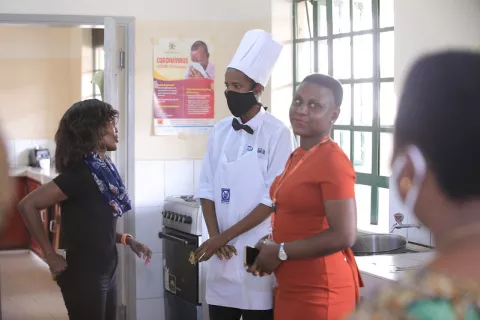
Image of three people, one of them dressed in a chef's uniform talking to the others

Design and pilot an apprenticeship scheme with the intention of modelling and replicating the pilot on a national level to address skills gaps and improve employment opportunities for young people, including refugees.

In Uganda, apprenticeships had been identified as a national tool to address skills deficiencies in the labour market. Consequently, in 2018, the Cabinet approved the Uganda National Apprenticeship Framework (UNAF) and directed the Ministry of Gender, Labour and Social Development (MGLSD) to design and implement a National Apprenticeship Scheme. In doing so, national counterparts adopted a vision of WBL that offered hands-on skills development, engaged employers and tailored learning so that it aligned to industry needs. PROSPECTS partnered with the MGLSD to design and pilot apprenticeship schemes with the intention of modelling and replicating pilots on a national level under the UNAF. The MGLSD identified the hospitality sector for the pilot, based on Uganda’s growing hospitality and tourism industry and the sector’s status as one of the largest employers of young people. Hotels and the service sector were also inclusive of refugees, with several three- and four-star hotels located close to the main refugee-hosting areas.

The MGLSD helped convene key players in the hospitality sector, and coordinate and monitor compliance with UNAF guidelines, the labour law and related employment policies. Hotel owners were represented by the Uganda Hotel Owners Association (UHOA), whose role was to mobilize employers, recruit apprentices and coordinate workplace training. An important measure was to ensure that the UHTTI and hotels could offer accommodation to apprentices during their training and work placements, particularly refugees coming from the settlements. The Uganda Hotel and Tourism Training Institute (UHTTI) led on the development and delivery of the training curriculum, and on the assessment and certification of apprentices, in coordination with the Directorate of Industrial Training (DIT). The DIT administered the government trade tests and issued trade certification. Workplace supervisors in each of the selected hotels were responsible for the apprentices and their learning outcomes. PROSPECTS developed a supervisors’ manual and training to help supervisors take up the role.

For the curriculum, four trades were identified in the hotel sector: food production, food and beverages, housekeeping and front-office management. The overall curriculum development process was led by the UHTTI, but all other partners (UHOA, DIT, MGLSD) were involved in the design and approval processes. Key to the curriculum development process was input from the hotel owners, who provided practical insight based on their day-to-day operations and business needs.

Apprentices spent 25 per cent of their time on theoretical training and 75 per cent on on-the-job training. PROSPECTS guided the UHTTI on specific outreach and training approaches that were accessible to refugees, with an emphasis on promoting social cohesion and assessing learning outcomes. PROSPECTS also supported the development and production of teaching materials and aids for TVET instructors and facilitators. These included training for facilitators in the use of the ILO handbook, Promoting Social Cohesion and Peaceful Coexistence in Fragile Contexts Through TVET. Trained facilitators included refugees from RYLOs who were supporting the rollout of TVET in the Nakivale settlement.  

The process of selecting apprentices was rigorous and time-consuming, but this was necessary to ensure employers and apprentices both experienced positive outcomes. Apprentices had to have a foundational skill set and motivation to pursue a career in the chosen profession. The application process involved several rounds of interviews, conducted by the UHTTI and UHOA, to assess foundational skills and work readiness. Although the young people targeted did not have to have previous work experience in hospitality, they did have to show enthusiasm for pursuing a career in the sector and the capacity to work independently. They were recruited from the Isingiro, Madi-Okolla and Terego districts, including from the two refugee settlements within them (Nakivale and Rhino). During the on-the-job training, apprentices first rotated among four trades to get a holistic appreciation of trades within the hotel industry, before choosing one of them to focus on for the remainder of their work placement. Throughout the course of the apprenticeship, apprentices maintained a logbook of learning, which was checked on a weekly basis by a workplace supervisor. These checks were used to monitor learning and ensure that the hotel was providing sufficient opportunity for the apprentices to work towards their predetermined learning outcomes. At the conclusion of the 12-month programme, the apprentices underwent theoretical and practical examinations administered by the UHTTI and hotel staff.

Of the first cohort of 100 refugee and host community trainees, 94 completed the training and graduated. The pilot helped raise the awareness of employers in the hotel sector of the availability of committed and skilled refugee workers at district level. Previously, many hesitated to employ refugees, believing that their temporary status and the fact that they lived in remote areas made them less reliable as employees. Having onsite housing for participants helped by giving young refugees the opportunity to prove themselves as committed and reliable trainees. One hotel reported that a refugee apprentice from a Francophone country had helped forge business with French clients and improve customer relations and ratings. This was only one anecdote but it does illustrate the value of having a diverse workforce and the skill sets refugees can bring to local businesses.

For the apprentices themselves, the programme opened doors to those who faced barriers in translating classroom-based training into a workplace environment. The training administered by the UHTTI involved cost and other logistical barriers that otherwise put the training beyond the means of the target group (refugee and host community young people not in employment, education or training). The programme covered enrolment fees at the UHTTI and provided living stipends for the duration of the pilot. These costs could be shared or covered by government bodies and employers in the longer term. The training was found to be highly practical and the nationally certified programme helped apprentices build experience and transferable credentials. The UHTTI found the training model practical and subsequently designed similar courses for the industry. In addition, it initiated work independently to collaborate with more industries on WBL, marking a notable shift away from the more general courses it had provided in the past.

The pilot also attracted attention from other donors, including the World Bank and the European Union, which supported two additional apprenticeship programmes designed by the MGLSD. The UHTTI, through the Ministry of Tourism, also attracted funding from the Ugandan government to run apprenticeship courses based on the PROSPECTS model. The government confirmed a funding line in the national budget to cover the costs of apprenticeships in the hospitality sector in subsequent years. It has since reviewed the curriculum and added two modules on pastry and barista/bartender, with approval by the National Curriculum Development Centre (NCDC). 

Success stories of trainees:

Find out more about the PROSPECTS programme’s wider learning on youth engagement.
Promoting social cohesion and peaceful coexistence in fragile contexts through TVET

Submitted by iloadmin on
Image
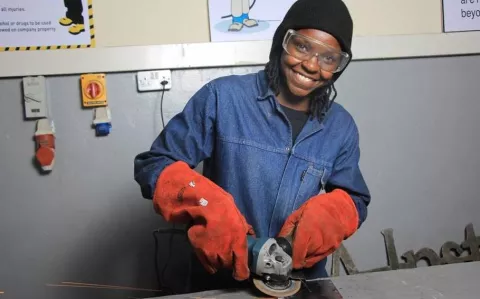
Image of a female trainee working on cutting metals with protect gloves and protect glasses on

Piloting a training guide to promote social cohesion in collaboration with TVET practitioners in various countries.

Promoting Social Cohesion and Peaceful Coexistence in Fragile Contexts through TVET is a guide that was developed to strengthen the role of TVET practitioners as active promoters of social cohesion. It provides practical guidance to trainers and managers of training centres on how to adapt delivery to mixed groups of students; embed conflict-resolution skills, cooperation and other relevant core skills into training curricula; and create conflict-sensitive, inclusive and diverse learning environments for all. The guide sets out a four-day curriculum to build the capacities of TVET trainers in facilitating core skills in social cohesion, so that they are able to include social cohesion elements in their skills development curricula.

Sample four-day curriculum:

  • Day 1: Creating the learning group and wider context
  • Day 2: Understanding social cohesion in fragile contexts working with youth and adults – the role of the trainer
  • Day 3: Exploring resources: what we bring and what else is out there to promote inclusion
  • Day 4: Assessing social cohesion and preparing for change

The guide was piloted under PROSPECTS in Kenya, Jordan, Ethiopia and Uganda, in cooperation with the Peaceful Change Initiative. A total of 73 trainers took part in a training-of-trainers session on incorporating conflict-sensitive methodologies and elements into the design and planning of vocational training programmes. In the Kenya pilot, occupational standards for technical trainers and the corresponding teacher-training curriculum were revised to take account of the role of trainers in promoting social cohesion and peaceful coexistence, following the guide. 
 

How obtaining a cosmetology diploma opened new doors

Submitted by iloadmin on
Image
Image of a worker in a beauty salon paining nails of a customer

In this video, Dickson Njoroge shares his inspiring journey through the beauty industry and how his diploma has opened doors for him, including the potential to apply for government jobs as a trainer.


Encouraged by his family, Dickson pursued cosmetology after high school and spent over three years honing his skills. With extensive experience, client recommendations, and photos of his work, he earned a Level 6 Diploma in Cosmetology through the Recognition of Prior Learning (RPL) process. He reflects on how the beauty industry has evolved with new technologies and specialised treatments. He shares experiences starting from childhood visits to his auntie's salon, where his passion for beauty began, till the date he graduated with accreditation.

Inclusive national RPL framework

Submitted by iloadmin on
Image
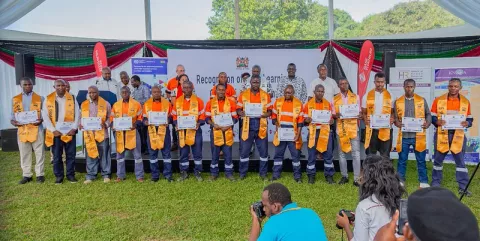
Image of a line of people receiving RPL certificates

PROSPECTS helped design and develop an inclusive RPL system to certify the  skills of refugee and host community workers.

The value of RPL has long been recognised in Kenyan legal and policy frameworks. The National Industrial Training Authority (NITA), part of the Ministry of Labour and Social Protection, has implemented a type of RPL since the 1960s, in the form of Government Trade Tests. In an effort to standardize these tests, the Kenya National Qualification Framework Act No. 22 of 2014 mandated the Kenya National Qualifications Authority (KNQA) to coordinate the development of national policies on RPL. A national policy was drafted in 2018, but not implemented. PROSPECTS responded to this gap in application by supporting the KNQA and relevant national bodies to develop a framework, implementation guidelines and assessment tools that were piloted with groups of refugees and host community members.

Under PROSPECTS, the ILO’s first line of support was to the Ministry of Education, through the KNQA,
and involved setting up a National Implementation Committee on RPL (NIC-RPL) and a National Advisory
Committee on RPL (NAC-RPL) and building their capacities. The next stage involved providing technical
assistance and guidance on developing an RPL policy framework and implementation guidelines. In doing
so, the PROSPECTS team was able to encourage the inclusion of language that made the extension of RPL
services to refugees and asylum-seekers explicitly. This then provided grounds for piloting in the refugee hosting
areas of Garissa and Turkana Counties, particularly as PROSPECTS Kenya already had memoranda
of understanding with the County governments.

To give practical effect to the policy framework and guidelines, support was also provided for capacity-building
and piloting. Fifteen members of the NIC-RPL received training and extended coaching sessions,
which proved critical in the development of RPL national training standards and practitioners’ guidelines.

In May 2021, an RPL assessment conducted in collaboration with the NITA and the TVET Curriculum
Development Assessment and Certification Council identified five occupational profiles for a pilot
intervention: textiles, automotive mechanics, welding, hairdressing, beauty therapy and agriculture. In all,
38 young refugee and host community members were assessed in these different occupational profiles.

Following the pilot, the Cabinet approved the RPL policy framework in April 2022, preparing the ground
for country-wide implementation. In the same month, the ILO supported the development of a national
implementation plan, in which stakeholders from, among others, accreditation bodies, TVET colleges and
employers’ and workers’ organizations participated. In May 2022, a costing exercise was commissioned
to calculate the Differentiated Unit Cost of RPL, in order to determine the cost of RPL processes and
put forward recommendations for financing models. PROSPECTS also provided technical assistance to
identify occupations that required proof of competency in sub-sectors that were attracting foreign and
domestic investment and that showed potential for considerable decent-job creation. This helped focus
efforts on operationalizing RPL based on demand and contributions to economic development.

The ILO also provided support to train national RPL practitioners on assessment tools and methodologies to scale RPL nationally. This included the development of an RPL Management Information System with the KNQA and TVET Curriculum Development, Assessment and Certification Council (CDACC). The MIS was integrated into all TVET CDACC centres nationally, including in Turkana and Garissa counties.  PROSPECTS also trained and accredited RPL assessors, facilitators and verifiers. This included development of an RPL Practitioners Continuous Professional Development (CPD) curriculum at the national TVET trainers college, the Kenya School TVET (KSTVET). 

As of April 2025, he national RPL system that PROSPECTS has helped operationalize certified 4,741 candidates, of which 905 were refugees. In one pilot,  PROSPECTS collaborated with
Base Titanium, a subsidiary of an Australian mining company, whereby 28 refugee and host community
employees of the company were assessed, 22 of whom were found to be competent and so were certified
through RPL. This helped the employer facilitate the movement of staff between its various locations in
Kenya and abroad. Other private sector actors, such as Kengen (an electricity producer) and the Kenya
Power and Lighting Company, invested their own resources in implementing RPL exercises and having
their employees assessed.


The PROSPECTS team also coordinated with other donors in Kenya to encourage them to include RPL as part of the skills development programmes they were funding. In the absence of RPL, individuals trained through these donor-funded projects would ultimately lack formal certification. PROSPECTS complemented activities under the Swiss-funded Skills for Life programme in Kakuma, for example, by certifying trainees through RPL, so that they graduated with a qualification.

Building on its active role in supporting the development and rollout of RPL, PROSPECTS Kenya leveraged opportunities to invest in further RPL curriculum development. For example, the ILO had established a partnership with an ICT training organization, Learning Lions, to train young people in coding, web design and animation. However, the certificate issued at the end of the course was not nationally recognized. In collaboration with the Technical and Vocational Education Training Authority (TVETA), PROSPECTS supported a review of the Learning Lions curriculum and used this as a basis to establish an RPL curriculum in creative design and web development. Refugee and host community trainees then had the opportunity to access the national RPL process and have their credentials certified. 

Read about success stories:

Find out more about the PROSPECTS programme’s wider learning on the digital and gig economies.

Ethiopia’s community-based health insurance

Submitted by iloadmin on
Image
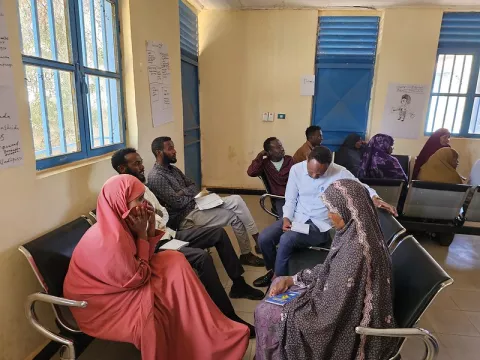
Image of a group of people sitting in a waiting room in a community centre

The ILO and UNHCR conducted a study in Ethiopia and found that enrolling urban refugees and asylum-seekers on to a community-based health insurance scheme is feasible, improves financial protection and could reduce UNHCR costs.

In Ethiopia, the ILO and UNHCR conducted a study to assess the feasibility of enrolling urban refugees and asylum-seekers in the community-based health insurance (CBHI) scheme in Addis Ababa. The study found that this was feasible and offered advantages over the UNHCR-provided life-saving and emergency treatments, in that CBHI inclusion would not only improve the financial protection of the target group when accessing health services but also potentially reduce UNHCR costs, as life-saving treatments were much more expensive.

Refugees were accessing free primary healthcare services, but had to pay out of their own pockets for secondary and tertiary care. The study evaluated the legal framework and the benefit package and service providers under CBHI. A major difficulty was the limited information that social protection providers had on the contributory capacity of refugees in Addis Ababa, meaning they mainly classified them according to their residential status, that is, under Urban Assistance Programme, Out-of-Camp Policy and self-relocation. The study suggested several ways forward and served as the basis for engaging the government and partners in providing services to refugees. The technical questions were reviewed in a technical working group that was established to address the operational aspects for including refugees and asylum-seekers in the CBHI scheme.

Find out more about this case study: 

Using Estidama ++ to enhance social protection

Submitted by iloadmin on
Image
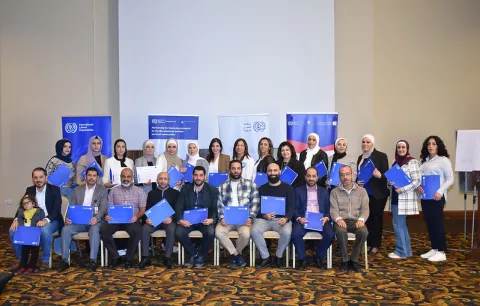
A group of workers sitting and standing in two lines holding a certificate in hand

Estidama++ extended social security coverage to vulnerable workers, including refugees, women and informal-sector workers.

Estidama++ was designed to extend social security coverage to vulnerable worker groups, including refugees, women, self-employed individuals and those in informal sectors, such as agriculture and small enterprises. Administered by Jordan’s Social Security Corporation (SSC), with technical support from the ILO and initial funding from the Kingdom of the Netherlands under the PROSPECTS Opportunity Fund, the programme has registered more than 37,500 workers as of 2025, more than half of whom are non-nationals, including refugees. It introduced contribution subsidies and tailored communication and outreach strategies to reach previously unregistered groups. Estidama++ was used by the SSC to enhance social protection, while addressing barriers to formalization. 


Estidama++ introduced targeted social security contribution subsidies to workers and employers to address affordability barriers faced by the self-employed and waged workers with low and unstable incomes. It also introduced a child benefit pilot, which paid USD28 per child per month, as a mechanism to improve attractiveness and promote women’s engagement in social security. The programme prioritized outreach for refugees in collaboration with UNHCR to overcome barriers like mistrust of national institutions and limited awareness of social security benefits. This included face-to-face outreach conducted with SSC representatives, the Ministry of Labour and UNHCR, including within the two largest refugee-hosting areas. 

A two-way chatbot was developed and piloted with SSC, allowing it to target communication to and gather information about potential and current members. In analysing data and collecting feedback throughout implementation, the programme identified areas for improvement and adjusted programme design. For example, higher attrition rates were observed among women and self-employed workers. This highlighted structural barriers that these particular groups faced, such as short-term contracts in the female-dominated education sector and irregular monthly incomes of self-employed individuals. This prompted a refinement of the subsidy design. By November 2024, 92 per cent of those who had registered for social security through the Estidama++ programme had transitioned into regular social security and continued to make contributions independently of the programme’s subsidy. 

The achievements of the Estidama++ programme and the way in which it addressed the gaps identified can serve as a blueprint for extending social protection to refugees and other groups of vulnerable workers. Estidama++ began as a targeted effort to use humanitarian funding for expanding social insurance coverage, focusing on contribution subsidies to incentivize formalization. However, expanding the coverage sustainably required a broader, systemic approach. Addressing challenges like affordability, relevance and financial sustainability demands solutions that integrate social protection with fiscal and employment policies, rather than relying solely on financial incentives.

Through Estidama++, the ILO was able to support the SSC in developing a long-term vision for reform. This systemic approach emphasizes addressing structural barriers and aligning social protection with Jordan’s economic modernization goals, ensuring equity and inclusivity for all workers, including those in non-traditional or informal employment. By using Estidama++ as an entry point, PROSPECTS has helped build a foundation for more comprehensive reforms that move beyond fragmented approaches to create a resilient and inclusive social protection system.


Read about Eyad Al Merjawi’s journey to obtain decent work and social protection in Jordan using Estidamaa++

Find out more about the PROSPECTS programme’s wider learning on gender and disability inclusion.

Subscribe to