

Ethiopia’s community-based health insurance

Ethiopia
Focus
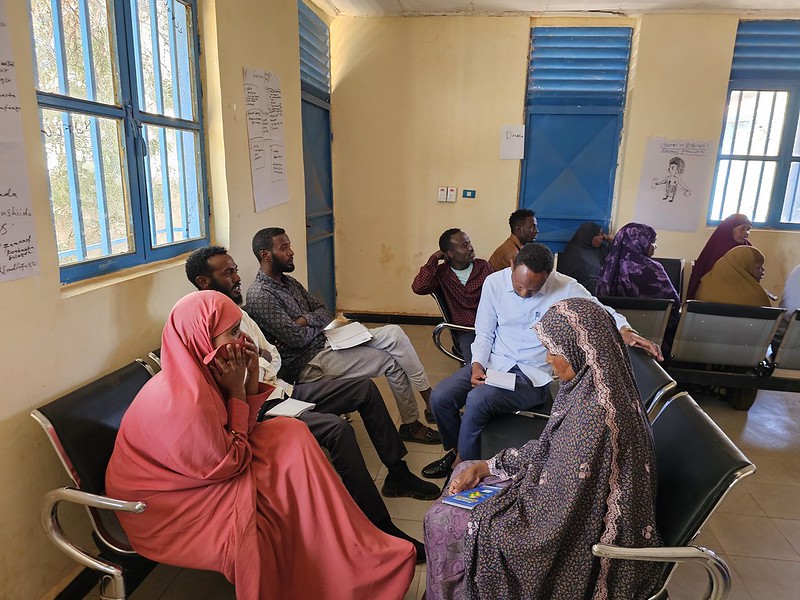
The ILO and UNHCR conducted a study in Ethiopia and found that enrolling urban refugees and asylum-seekers on to a community-based health insurance scheme is feasible, improves financial protection and could reduce UNHCR costs.
In Ethiopia, the ILO and UNHCR conducted a study to assess the feasibility of enrolling urban refugees and asylum-seekers in the community-based health insurance (CBHI) scheme in Addis Ababa. The study found that this was feasible and offered advantages over the UNHCR-provided life-saving and emergency treatments, in that CBHI inclusion would not only improve the financial protection of the target group when accessing health services but also potentially reduce UNHCR costs, as life-saving treatments were much more expensive.
Refugees were accessing free primary healthcare services, but had to pay out of their own pockets for secondary and tertiary care. The study evaluated the legal framework and the benefit package and service providers under CBHI. A major difficulty was the limited information that social protection providers had on the contributory capacity of refugees in Addis Ababa, meaning they mainly classified them according to their residential status, that is, under Urban Assistance Programme, Out-of-Camp Policy and self-relocation. The study suggested several ways forward and served as the basis for engaging the government and partners in providing services to refugees. The technical questions were reviewed in a technical working group that was established to address the operational aspects for including refugees and asylum-seekers in the CBHI scheme.
Find out more about this case study:
Continue reading

Case study
Extending social protection to workers in the informal economy

Kenya