

Digital monitoring conducted by engineering students

Iraq
Focus
A digital monitoring tool, piloted in Iraq's Kurdistan region, enabled young engineers to monitor EIIP sites, ensuring quality and safety standards, while providing valuable digital work experience.
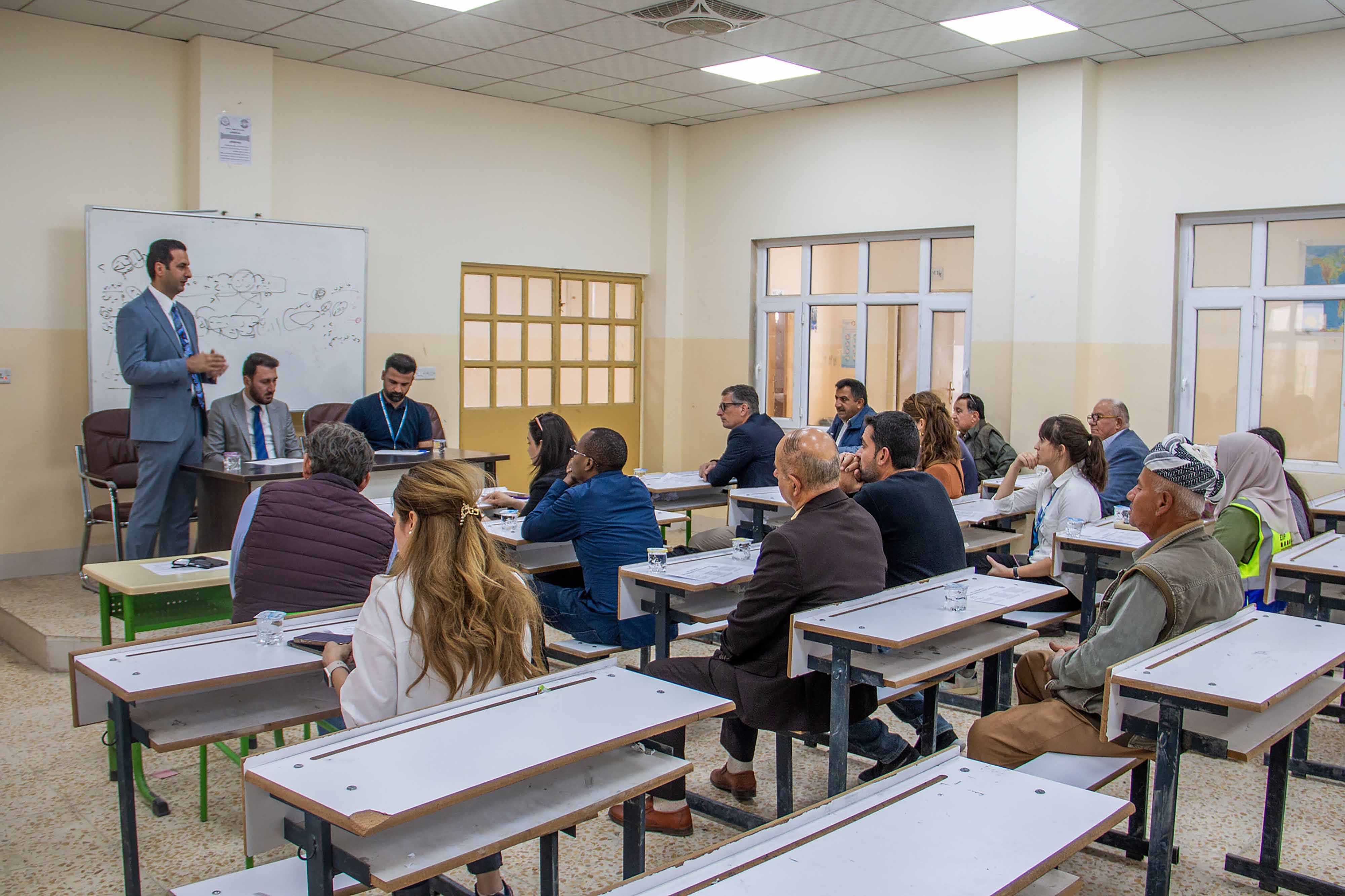
In Iraq, a simplified digital monitoring tool was introduced and used by young engineers to carry out monitoring and reporting on Employment-Intensive Investment Programmes (EIIP) sites. The tool was designed to ensure adherence to quality of work, alignment with environmental and social safeguards, and safety standards across project sites, while also introducing a technology that would allow young people to gain work experience using digital skills. Both project sites in Dohuk and Mosul had large universities with engineering departments which produced a large pool of graduates seeking practical work experience. To capitalise on the talent pool and introduce monitoring tools that captured information in real time, survey information was uploaded to Kobo Toolbox. This included technical aspects to measure the project’s implementation, as well as social and environmental elements. The tool was already in use by other humanitarian and development actors in the area. The tool was first introduced on green work sites in the Kurdistan region, with young engineers from the University of Dohuk. After a successful roll out on project sites in Dohuk, it was rolled out in Mosul. Here, it proved particularly useful for continuous monitoring when PROSPECTS staff could not access project sites, owing to security requirements that made travel more costly and time-intensive. The tool is now used for all EIIP programmes across Iraq and the team is looking at ways to institutionalize it in governmental public works programmes.
Find out more about the PROSPECTS programme’s wider learning on youth engagement and digital and gigs economies.
Continue reading
Case study
Engaging trade unions
Iraq