

Youth engagement around JSC

Jordan
Focus
The PROSPECTS Jordan team successfully adapted and implemented the Job Search Club (JSC) model in partnership with UNICEF and the Jordanian Ministry of Youth to address high youth unemployment, incorporate national policies, and include a focus on green jobs.
In 2019, the Jordanian Ministry of Youth (MOY) launched its National Youth Strategy, which called for a focus on increasing the availability and reach of services to young people through MOY centres. Following the COVID-19 pandemic, youth unemployment, that is, among those aged 15 to 24, exceeded 46 per cent; as of 2023, it remained at just over 41 per cent. This drew national attention to the situation of young people and confirmed the need for more concerted support. The MOY National Youth Strategy highlighted links to Jordan’s Vision 2025, a detailed socio-economic plan put forward by the King, entitled “Developing career guidance, employment services and changing business culture”. With these policy elements in place and against a backdrop of high youth unemployment, the PROSPECTS Jordan team adapted the JSC model from the programme in Egypt and applied it in partnership with UNICEF, using the MOY youth centres as spaces in which to convene the clubs.
Adaptation of the tool began in consultation with the PROSPECTS team in Egypt, along with the JSC master trainer in that country. The MOY in Jordan approved adaptations and provided feedback in the process. The version adapted for Jordan took into consideration labour market governance, particularly policies governing refugees’ access to specific trades and occupations. This included work-permit processes, sectors that were “closed” to foreigners and regulations to register a business. Because Egypt and Jordan shared the same language, similar cultural contexts and groups of refugees, the adaptations were relatively easy to make.
Taking the example of Egypt, the PROSPECTS Jordan team established a partnership with the MOY. It did so jointly with UNICEF, whose mandate lent itself to the activity. It established a UN-to-UN Agreement with UNICEF for the JSCs, with UNICEF transferring funds to the ILO to apply and implement the methodology. Under this collaboration, UNICEF used its partnership with the MOY to secure youth centres as spaces in which to convene the clubs. It also conducted outreach activities related to the JSC among youth groups and youth-led organizations. The ILO was responsible for adaptation, application and follow-up. Both organizations appointed country-based staff as focal points to ensure coordination and oversee day-to-day operations.
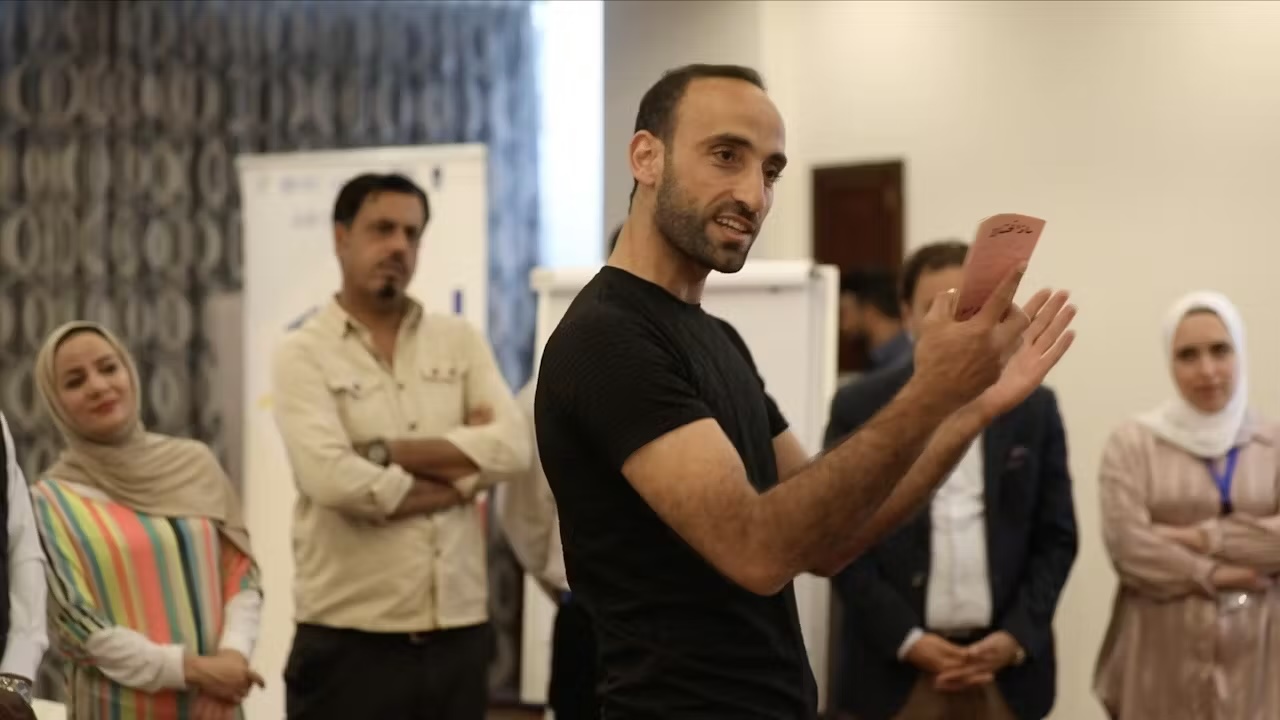
The JSC started with training for facilitators, led by the master trainer from Egypt and including staff from UNICEF, the ILO, MOY and the partner selected to implement the clubs, the Business Development Centre. The week-long training covered the role of facilitators and skills for successful facilitation, supporting job-search functions and providing job-seekers with information on job vacancies and skills requirements. Given that the clubs would bring together both refugees and members of the host community, attention was given to addressing social cohesion between these groups.
In the pilot phase, 20 clubs were set up across the three largest refugee-hosting governorates. These included clubs inside the Zaatari and Azraq refugee camps. Each started with ten days of training, providing skills to build the employability profile of participants, followed by coaching and peer-to-peer support.
The pilot served as proof of concept, which enabled the MOY to pilot it and scale it up. By engaging the MOY directly in the adaptation and facilitator training, the Ministry’s ownership of the methodology was reinforced. The Ministry subsequently endorsed JSC as a method to deliver the aims of the National Youth Strategy. JSCs responded to real needs, namely, very high youth unemployment among both host and refugee communities in the country.
After the pilot, the JSC methodology was further adapted to focus on “green” jobs. This was partly influenced by the Ministry of Labour’s National Employment Plan 2023, the aim of which is for 10 per cent of all jobs in the Kingdom to be green by 2030. An accompanying green jobs assessment also demonstrated the current and anticipated potential for green jobs in Jordan’s agriculture, energy, manufacturing, tourism, transport, waste management and water sectors. The format of the clubs remained similar to those convened in the pilot phase but introduced the concept of green jobs and how these contribute to environmental preservation and restoration. In two cases, green JSCs were convened in universities, which provided a pool of qualified refugee and Jordanian youth in the process of pursuing green professions. In addition, a job fair was organized with private sector employers in green sectors and enterprises.
The evolution of JSC in Jordan illustrates a model that is linked to national policies and processes, while also considering genuine labour market challenges faced by young people. The methodology was relevant and beneficial to both refugees and host community members, with both groups reporting similar levels of employment directly after their participation in the clubs.
Read success stories of JSC graduates and facilitators:
- Jordan: the success story of four young people with JSC
- Story of a JSC refugee facilitator: a job changed my life as a refugee
Find out more about the PROSPECTS programme’s wider learning on youth engagement.